
Objective
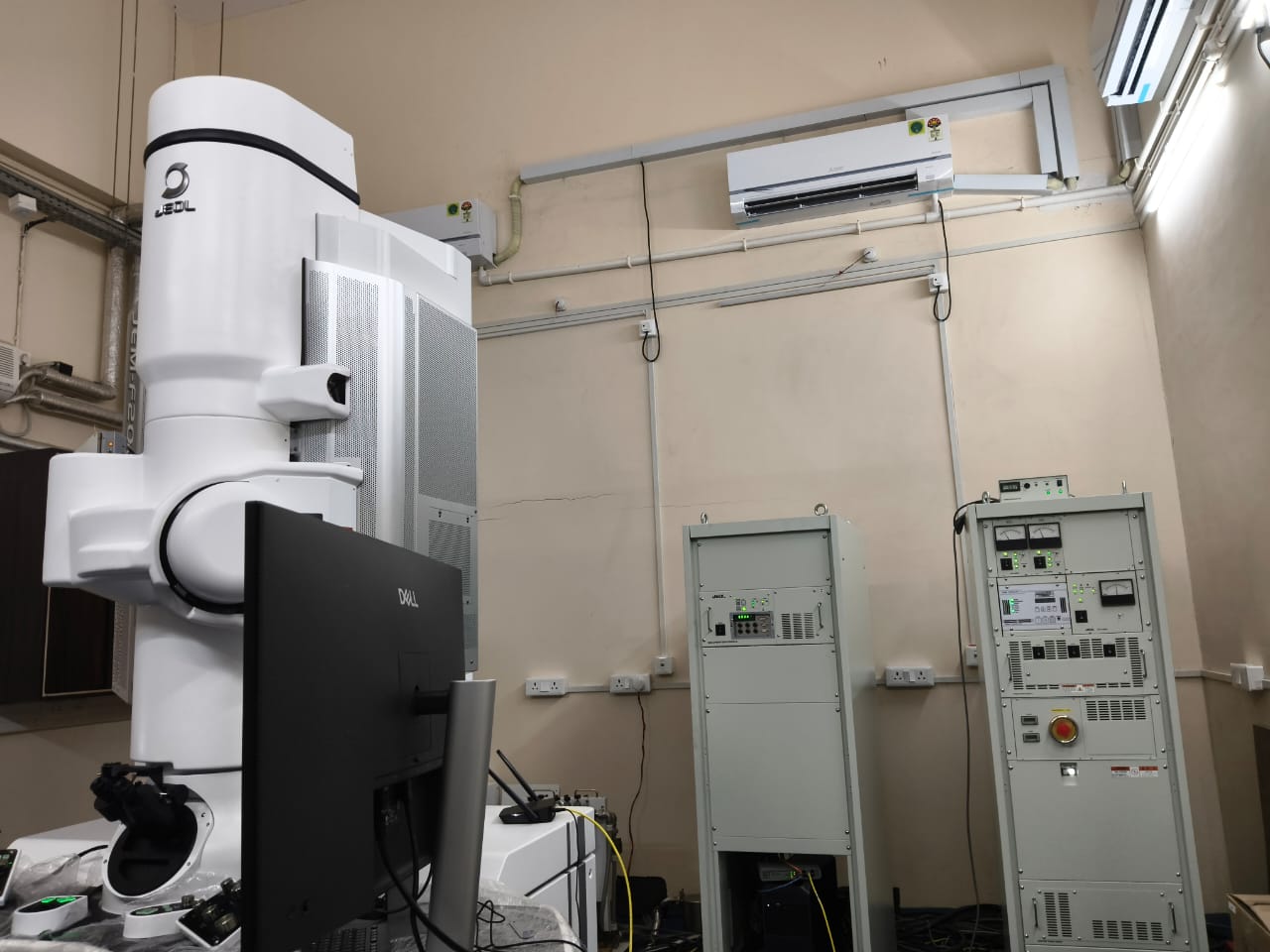
The JEOL JEM-F200 is an analytical transmission electron microscope at
the Central Research Facility, IIT Kharagpur. It enables researchers to examine
the morphology, crystal structure and elemental composition of materials at the
nanoscale.
Equipped with a Schottky field-emission electron gun, the instrument supports transmission electron microscopy (TEM), scanning transmission electron microscopy (STEM), selected-area electron diffraction (SAED) and energy-dispersive X-ray spectroscopy (EDS). These techniques can be used together to relate a material’s structure to its local composition
Equipment & Details
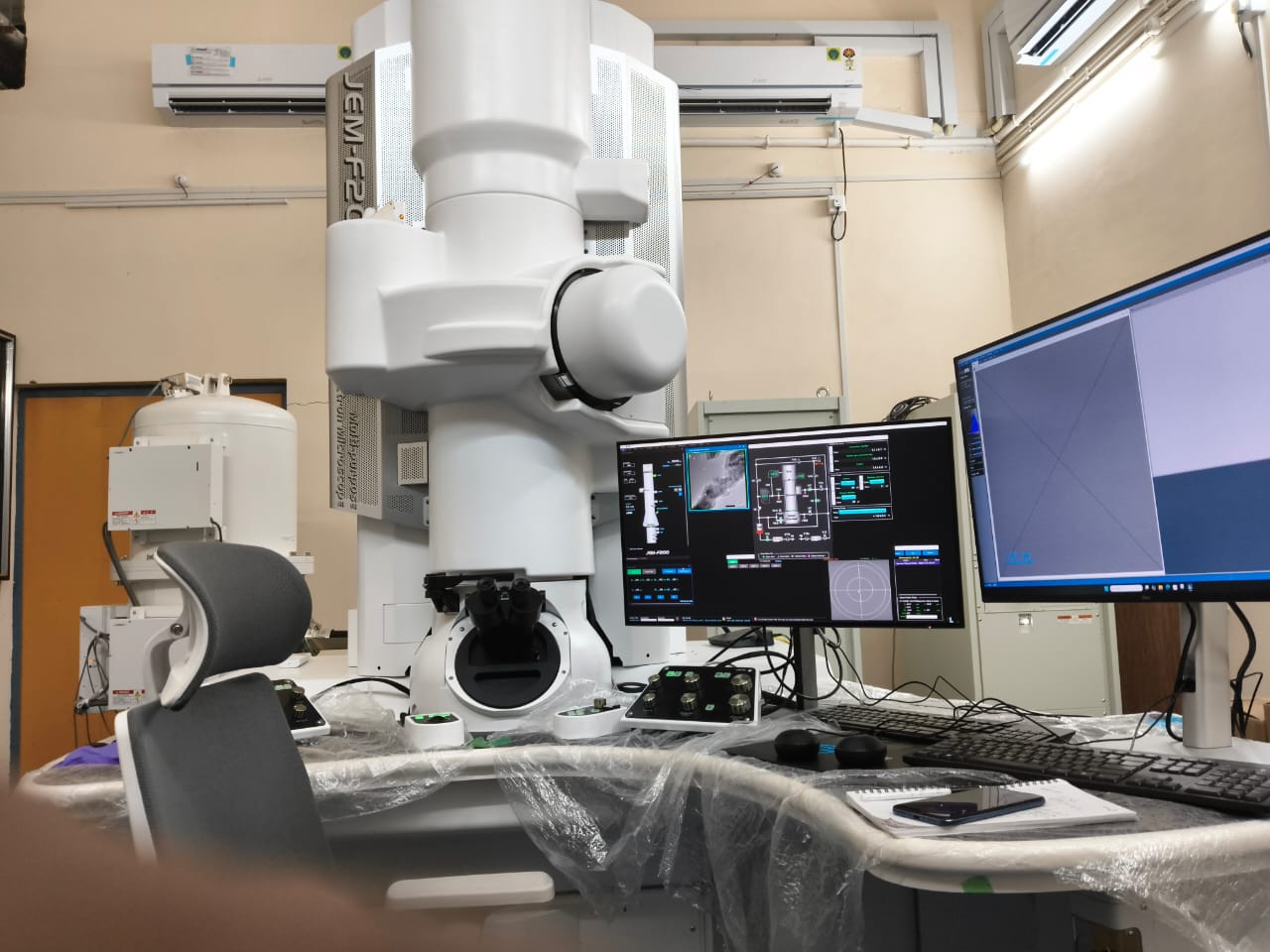
Jeol make advance Multipurpose 200 KV Field Emission Transmission Electron Microscope
Model
: JEM-F200 (TF-HR)
Purchase Order No : 01/IIT/PO/F/EQ-01/CRF/2024 Dated 05-04-2024
Sample Details
Suitable specimens must be sufficiently thin for electrons to pass
through and must be dry and compatible with the microscope vacuum. Samples may
include nanoparticles, thin films, powders dispersed on TEM grids and
appropriately prepared biological specimens.
Users
should inform the facility in advance if a sample contains magnetic particles
in the micron or sub-micron range.
Utility and Working Principle
In conventional TEM, a parallel electron beam passes through a thin
specimen. Interactions between the electrons and the sample produce images that
reveal its morphology and internal structure. Electron diffraction provides
information about crystallinity and crystal structure.
In STEM mode, a focused electron probe scans across the specimen to form
images. EDS detects characteristic X-rays emitted by the sample, allowing
elemental analysis and composition mapping.
Together, these methods support research on metallurgical specimens, semiconductors, nanomaterials, catalysts, ceramics, biological samples, composites and materials from various other genres – making this a versatile characterization platform